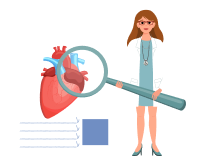

A heart attack can be simply defined as the death of parts of the heart cells, resulting from a sudden blockage or significant narrowing of the coronary artery that supplies the relevant area of the heart muscle.
The most common cause of heart attacks is atherosclerosis affecting the coronary arteries. Atherosclerosis is a complex process in which fatty particles – such as cholesterol – are deposited in the walls of the arteries, gradually accumulating in certain places and giving rise to so-called atherosclerotic plaques.
Atherosclerotic plaques reduce the elasticity of the arteries and can gradually narrow their lumen as they grow. Acute myocardial infarction most often occurs when one atherosclerotic plaque ruptures inward and a blood clot forms on the ruptured plaque, blocking the coronary artery.
This causes the heart cells that the affected artery was previously supplying with blood to become hypoxic. If the hypoxic condition lasts for more than approximately 20 minutes, the heart cells begin to die, resulting in a heart attack.
Acute heart attack most often manifests as a severe, pressure-like, squeezing or burning pain in the front of the chest that occurs at rest.
According to the ECG findings (recording of the electrical activity of the heart), we divide heart attacks into so-called STEMI (there are ST elevations on the ECG, indicating extensive damage to the heart muscle) and non-STEMI (there are no elevations on the ECG, the heart attack is usually of a smaller extent, sometimes also called NSTEMI).
A patient with an acute myocardial infarction is in direct danger of life!
The most important factor that affects the chance of survival is time. Therefore, if someone experiences the symptoms described above – especially chest pain (especially if it lasts longer than about 10 minutes), the affected person or his/her surroundings should contact the emergency medical service (telephone 112) as soon as possible.The patient should remain calm until medical help arrives. If cardiac arrest occurs (unconsciousness, respiratory arrest, no palpable pulse), emergency resuscitation (especially heart massage) should be started immediately.
Non-pharmacological treatment is percutaneous coronary intervention – PCI, coronary intervention performed through a puncture through the skin.
This is the so-called catheterization method (cardiac catheterization) – the goal is to open the coronary artery, the blockage or significant narrowing of which caused the infarction. The aim is always to prevent further death of heart cells due to their lack of blood supply by opening the affected artery early. Especially in the case of STEMI, coronary intervention should be performed as early as possible.
Cardiac surgical revascularization (surgery with the sewing of so-called coronary bypasses).
Cardiac surgical revascularization is a surgical method (heart surgery) in which a narrowed or blocked area in a coronary artery is bridged with the help of so-called bypasses (most often created from arteries and veins taken from the inside of the chest or from the lower extremities). It is used less often in patients with acute infarction.
Early hospital care includes admission to a coronary unit (cardiological intensive care unit), monitoring of ECG, blood pressure and other vital signs, blood sampling (usually repeated) to assess basic blood composition parameters, indicators of heart damage and the function of other organ systems (kidneys, liver) or cholesterol levels, ultrasound examination of the heart, chest X-ray.
A wide range of drugs are used in the treatment of heart attacks today, which have been shown to improve the course of the disease or reduce the risk of another heart attack. The appropriate combination of drugs and the timing of treatment are selected according to many parameters, such as the extent of heart damage or associated diseases. However, all drugs can have undesirable side effects, and therefore it is necessary to consult a doctor if new difficulties arise and, for prescribed drugs, always read the patient information leaflet after discharge from the hospital.
Immediately after the diagnosis of acute heart attack, heparin and acetylsalicylic acid are usually administered intravenously, nitrates can be administered intravenously to reduce high blood pressure, treatment with another antiplatelet drug is initiated, analgesics can be administered to relieve pain, and in selected cases, platelet blockers are administered intravenously. Depending on the specific condition, a number of other medications may be prescribed.
The administration of acetylsalicylic acid (in oral – tablet form) and treatment with another antiplatelet drug as part of the so-called dual antiplatelet therapy are continued. The administration of a beta-blocker, an ACE inhibitor and a statin is initiated
During regular check-ups with the doctor, the treatment is adjusted according to the measured values of blood pressure, heart rate, results of regular laboratory and other examinations, or according to the possible presence of undesirable effects of the treatment. If the cholesterol level remains too high even with the maximum tolerated dose of statins, it is appropriate to add another hypolipidemic agent – ezetimibe or a subcutaneously administered PCSK9 inhibitor.
Contact our cardiology experts for personalized advice.